

Google Updated the SEO Rules: Mastering the Feb 2026
Google Updated the SEO Rules: Mastering the Feb 2026 Google Discover Core Update – February didn’t bring a normal Google shake-up. It felt more like the ground shifting under the entire search ecosystem.
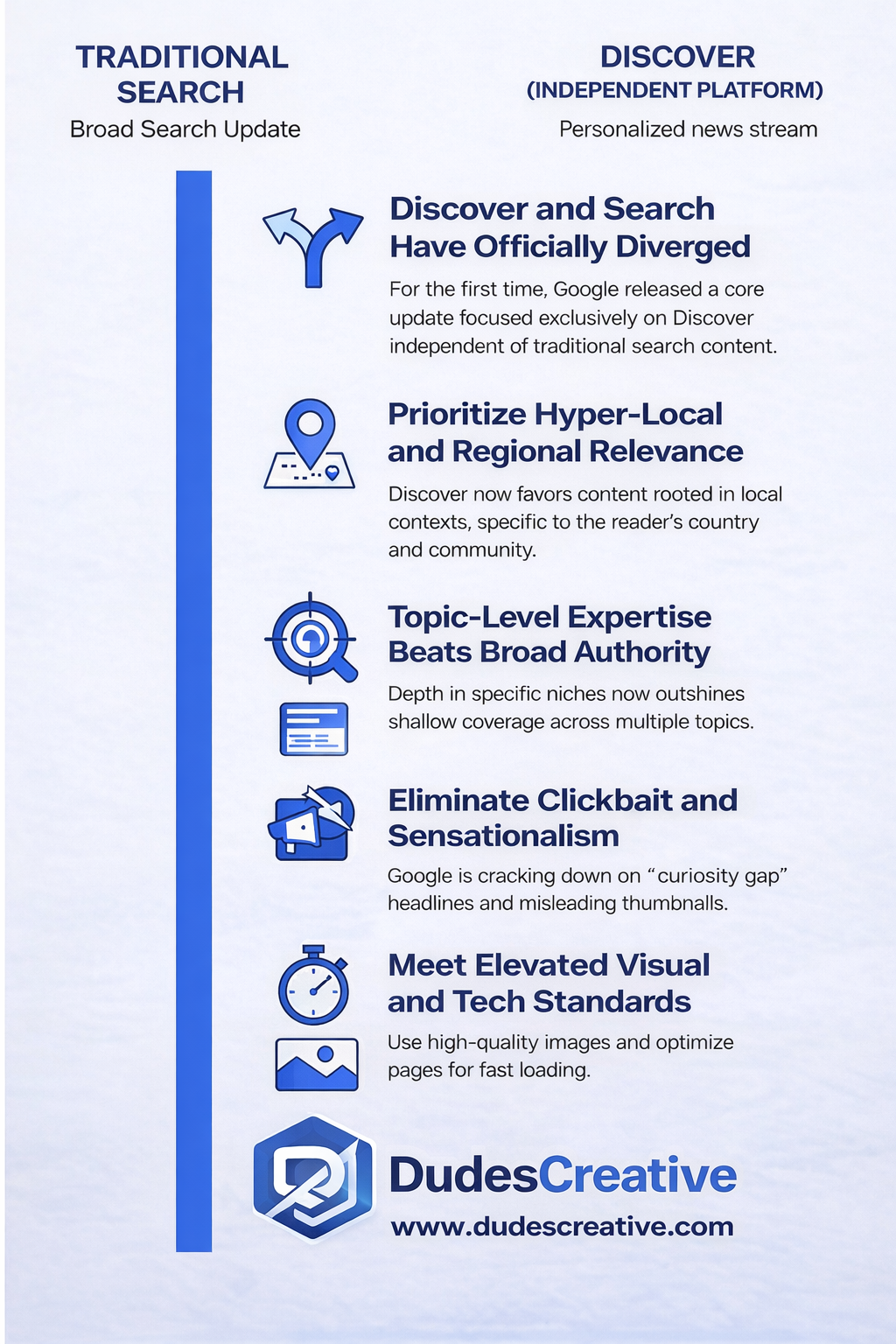
Instead of tweaking one big ranking system, Google quietly split the playing field into product-specific algorithms. In simple words: Search and Discover are no longer playing by the same rulebook.
If your analytics looked unstable this month, you’re in very crowded company. Many sites saw traffic swings that we haven’t witnessed in years.
Let’s unpack what actually changed — and what smart brands should do next.
Discover Is Officially Its Own Algorithm
For years, Discover felt like the mysterious cousin of Google Search. You could get traffic from it, but the ranking logic was never clearly separated.
That changed in February.
Google rolled out a dedicated core update specifically for Discover, independent from the broad core update that affected search results earlier in the month.
This confirms something many SEOs suspected:
Ranking in search and performing in Discover are now two different disciplines.
You can rank #1 in search and still get zero Discover visibility if your content doesn’t fit the Discover ecosystem.
That’s a major mindset shift.
Local Content Just Got a Massive Boost
One of the most noticeable changes is how strongly Discover is leaning into geographic relevance.
Google is increasingly prioritizing publishers from the same country as the reader. That means local businesses and regional publishers suddenly have more room to compete against massive international websites.
For global brands, this changes the content strategy entirely.
The era of publishing one universal article and expecting worldwide reach is fading. Content now needs to feel regionally grounded — reflecting local culture, news cycles, regulations, and real-world context.
Localization is no longer a “nice to have.” It’s becoming essential for Discover exposure.
Authority Is Now Built Topic by Topic
Google has also moved away from judging authority at the domain level and is now evaluating expertise at the topic level.
This is huge.
A website doesn’t need to be an authority on everything anymore. It just needs to consistently demonstrate depth and expertise in specific areas.
This opens the door for niche creators and focused brands.
Instead of publishing endless surface-level content, the smarter approach is to build deep topic clusters that explore real problems, real solutions, and real experiences.
Depth is replacing volume.
Clickbait Headlines Are Losing Power Fast
Discover has always been sensitive to engagement signals, but this update appears to have strengthened Google’s ability to detect manipulative headlines and thumbnails.
Curiosity gaps, exaggerated promises, and misleading imagery are getting filtered more aggressively.
That doesn’t mean headlines need to be boring — but they must be honest and grounded in reality.
Clear, descriptive, human headlines are now a competitive advantage.
Trust has become a measurable ranking factor.
Experience Is Becoming the Ultimate Differentiator
Google continues to double down on E-E-A-T, and the “Experience” component is now impossible to ignore.
AI content itself isn’t the problem. The real target is mass-produced, generic content with no real-world perspective.
Google is actively favoring content that includes:
-
Firsthand testing
-
Original data
-
Interviews and quotes
-
Personal insights and observations
This is pushing brands toward what we call brand journalism — content that feels reported, lived, and real.
The more human your content feels, the stronger your signals become.
What Smart Brands Should Focus On Now
If Discover traffic matters to your business, here are the practical moves to make:
Prioritize mobile experience
Discover is mobile-first. Fast pages, clean UX, and large high-quality images are essential.
Strengthen trust signals
Clear author profiles, credentials, and transparent publishing practices matter more than ever.
Separate Discover analytics from search analytics
Treat Discover as its own channel. Track it independently and optimize accordingly.
Avoid reactive changes during rollout
Core updates take time to stabilize. Give the dust time to settle before making big structural changes.
The Big Picture
Google is slowly shifting away from rewarding sheer content volume and moving toward rewarding genuine expertise and authentic storytelling.
The brands that will win in this new landscape aren’t the loudest publishers — they’re the most credible ones.
Build content for real people first.
Everything else is starting to follow.
Reference: Google SEO Guide